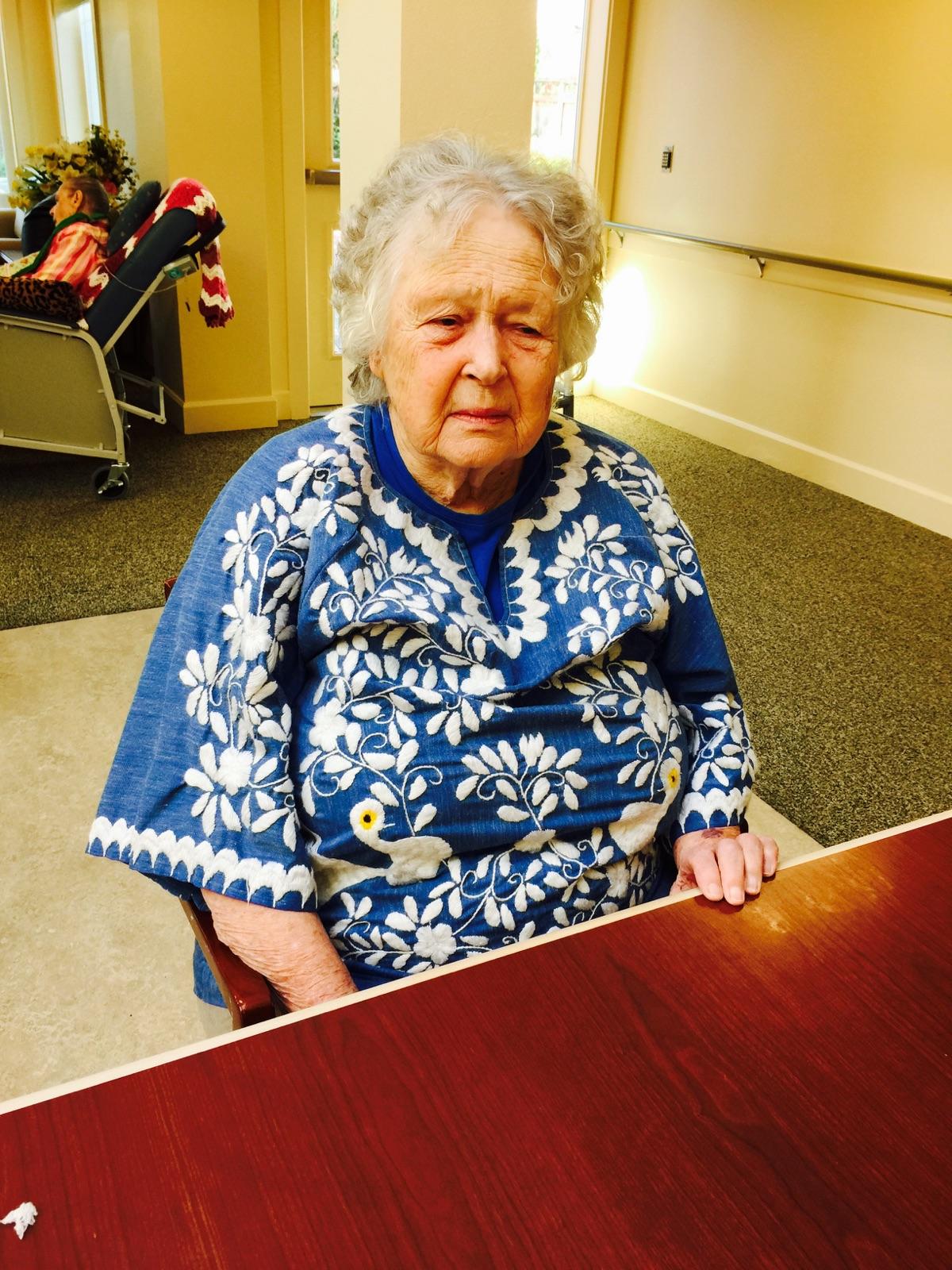
The skies were wracked with clouds today; the sun trying to shine through. Before I left to see Mom I received a snap in a text that showed her smiling and out of her room. The sun began to shine outside.
The past few days have been something of a torment. Mom had been doing so very well, and then the chair incident from last Tuesday. From there we went to less food, less interaction, and finally her not being able to walk or stand on her own.
Today, Mom had a very soft voice - nearly unintelligible. She ate very little (probably about 50% breakfast and <10% lunch, but did eat afternoon snack). She was so very tired, but they kept her in the great room so she would be stimulated and wouldn’t just sleep, as she did all weekend.
This was not the woman I remember, but I know she’s in there somewhere. And, as I begin to line the final ducks up in their row, I wanted to understand the final phase of Lewy Body Dementia. Are we truly there? Are we really undergoing that transition?
According to the Alzheimer’s North Carolina:
- By the end of the disease, the person will typically be bedbound or will need specialized seating in a reclining seating system. Rigidity and stiffness are very common and make movement and care very difficult for both the caregiver and the person with DLB. The person is able to move little and requires major amounts of physical help for all care and engagement in preferred activities. The person may find touch uncomfortable and painful, even if it is delivered slowly and gently. The person typically has a very difficult time communicating. Speech is very soft and indistinct and often off target or repetitive in nature. (DLB)
This is almost Mom at this time, except for the touch. Mom liked it when I stroked and held her hands today.
Mom is now going to be using a wheelchair, as she can no longer support her own weight. She cannot walk - she needs at least 2 aides to move from place to place.
When Mom ate, it was either by my feeding her, or her trying, but she kept dropping spoons and losing her grip on the dish. The strength she had last Monday has left her.
As I stated earlier, her voice is very quiet. If she weren’t out in the great room, she would be in bed, asleep.
So, what’s next? More of the same, but incrementally becoming more pronounced in its presentation:
- Death is typically a result of pneumonia or other infection, which the body cannot fight off even with the use of antibiotics. Pneumonia is typically caused by aspiration (food or liquids getting into the airway due to problems with eating or drinking and breathing regulation). Other infections can be localized (repeated UTIs (urinary tract infections), open pressure ulcers or wounds (caused by the inability to move or friction with repeated movements), skin injuries (when hitting a hard or sharp surfaces or skin exposure to urine or feces), or contractures (tightening and shortening of muscles that keep body parts closed together), the use of tubes or catheters (feeding tubes or urinary catheters). Still other infections can be or systemic, called sepsis, an infection in the blood stream. Other causes of death include malnutrition and dehydration, complications following falls (head injury or fractures), pulmonary emboli (clots that travel to the lungs due to prolonged immobility), or heart failure.(DLB)
This is the part I must be ready to face.
Knowing that Mom is in hospice, and also receives some of the best palliative care possible, makes me glad that I know she’s comfortable and well cared for.
One question that seemed to come up in my conversations with the hospice staff was ‘Why was she punching so many people for no reason?’ Well, according to livestrong.com, in the final stages of LBD Anxiety, depression, emotional ability and aggression are common in late-stage LBD.Final Stages of Lewy Body Dementia
I guess that answers that!
The best information, though, came from the blog The Lewy Body Rollercoaster (Nearing the End of the LBD Journey) This helps answer so much, and also offers what we might expect in the next weeks/days: This was posted by the Whitworths, authors of some of the books recommended on this blog.
Saturday, April 21, 2012
Nearing the End of the LBD Journey
We received a question recently about how end-stage Alzheimer's (AD) and LBD differ, and what to be concerned about. By the time a person reaches end-stage dementia, there’s so much damage that it’s all very similar and you may not see much difference. These are some of the differences you might see along with some suggestions about care:
Cognition degeneration: Both AD and LBD are degenerative dementias. That is, cognitive abilities will gradually decrease over time.
o LBD’s characteristic fluctuations between awareness and confusion continue even into this late stage, albeit, few and far between. It is not unusual for patients to know their family members just before death. Look for these and take advantage of them for a final goodbye. However, remember that by now, your loved one will not be able to communicate well.
· Communication: Eventually any dementia patient will lose the ability to communicate through the normal channels of talking and facial expressions. However, there’s research saying that comprehension is the last ability to go, and so continue talking to your loved one and assume understanding. Remember that touch continues to be important, as does a loving tone of voice. In addition, don’t talk about them or argue with others in their presence anymore than you would if they were responding.
o LBD weakens facial muscles, thus talking and facial expressions become difficult often well before the end stages. Add LBD’s larger share of confused thinking. The result is that much earlier than with AD, LBD folks may stop trying to communicate through normal channels. Behavior becomes the main form of communication.
· Acting out behaviors: Consider acting-out behaviors the body’s call for help. They usually become more intense as normal channels of communication fail. Look for physical and/or environmental reasons for the behavior: pain, too much stimulation (light, sound, etc.) See previous blogs, and our book, The Caregiver’s Guide to Lewy Body Dementia.
o LBD affects thinking early on, thus acting-out due to delusions can be a very early, sometimes first symptom. LBD-related symptoms such as hallucinations and acting-out behaviors will increase as communication becomes more difficult. However, they may change in form. With degenerating health, agitation and restlessness may be the most common “acting-out” behaviors.
· Sleeping. People with any kind of dementia tend to sleep more and more as the end nears—20 hours a day is more the norm than not. If your loved one is restless or agitated at this stage, consider this “acting-out behavior” rather than a sleep problem.
· General health: Eventually any degenerative dementia will cause a body to become incapacitated and die.
o LBD is more than a cognitive disorder. As already mentioned, its effect on muscles makes communication difficult. It can also weaken other muscles, and it can affect physical health right from the beginning. Therefore, complications like pneumonia, urinary tract infections or falls can be life threatening. Good patient care and early detection of problems become very important. Consider increased acting-out a signal that something is not right. Check for UTI’s, constipation, or other signs of discomfort. If you can find and remove the irritant, the restlessness should decrease.
· Life expectancy: If there are no complications, a person with dementia can live for many years before enough brain cells have died to shut everything down—often 20 years or more.
o LBD patients usually do have complications. Therefore, life expectancy is short: 2 to 7 years after diagnosis. However, LBD is seldom diagnosed until well into the disease process. Life expectancy from the first LBD symptom remembered by spouse or family would likely be similar to AD’s 15-20 years—perhaps longer with good care.
I will be posting more research as it comes up, but also updates on Mom, so stay in touch!
Reading/Research: