Sunday, January 10, 2016

Continuing the Adventure - The Week Ending 01/10/2016

This week saw nothing abnormal, really!  Oh yeah!  There was the one incident - Mom was in a mood, the other evening.  But I’ll get to that in a short bit.  The truth is, Mom has been slowly degenerating, again, and it’s actually a matter of time before the next shoe drops - I’m guessing within the next 2 weeks, but then, who am I?

Mom has been eating rather well - refusing some meals, or eating most of some and little of the others - but then her activity level hasn’t exactly been Olympic, so her need for extra calories doesn’t exist.   

Her moods have been pretty congenial, as well.  She allows staff to help her change, shower, and clean her, when necessary - except the other night.  Now I’ll tell the tale.

The other night, Mom was having one of her “It’s so tough to be nice for such a long time” conflicts (read Taylor Caldwell’s “Growing Up Tough - the first chapters will enlighten you).  Anyhow, poor Reina was attempting to help Mom who was a mess.  Mom took off her disposable “necessities” and refused to be cleaned or have help changing.  During this time she had (let us say) a watery episode.  Mom was adamant that Reina was not going to help!  Nor was anyone else!  

So, Mom put on her nightie after taking off everything else.  Next, she decided she was going to continue going out without the disposable “necessity”.  Reina stepped in to remind her and help her when suddenly Mom became a cat.  Yes, she lashed out with her hands and scratched the poor Reina across the face.  Well, that didn’t go over so well.   

Finally, they were able to enable her to get into something more appropriate and calmed her down.  Within a few minutes, Mom had forgotten the incident and was back to being calm, but there was still an edge….

Yes, they phoned me.  

On Thursday, Connie and Jean came to visit.  Here is their account:

We got to St A's after 11 today; Connie signs us in.
Norma was sitting quietly at a table in the great room, looking at the Nat'l Geographic Christmas catalog.
Connie gave her the Wall St.Journal and a catalog filled with expensive "toys" for people who have too much money. Connie wore her warm hat from Iceland and a long warm scarf.

We chatted about what's happening in our lives, and Norma made some comments we did not catch. At one time she was on her way to a longer sentence about something but lost it.  Rosa said that Mom has been more alert lately.  She was wearing the maroon shirt and pants--what color?
Norma does not like it when Jean says hello or waves to one of the friendly residents. Jean  said, "Mea culpa," and told  her she would try to stay humble.
"STAY humble?" she said with a sly smile.  Our friend was back with us.
Jean got more coffee for Norma and a cup for Connie.  Rosa brought juice for all of us.
Then Lianna  and Rosa offered to move a table (all four were in a row, with lunch coming) so we three could be a bit separate from other tables--and residents. Norma did not appear to be inclined to  stand up while her chair was moved; We grabbed Connie's walker and told Norma to see how nice  it was to use.  (Was a matter of  just a few feet.)
Lunch came--a dish of yogurt, then soup, later a plate with a good helping of potato, lots of cut-up chicken and broccoli.  Herself did not seem interested,  as we encouraged her. We hope our conversation did not discourage her from eating.  She ate very little, offered her plate to Jean, then to Connie; we declined, said she needs good food to be healthy.

Lianna said she would heat up the lunch when Norma was ready. We wondered if she ever was ready.
Sleepy time, with nodding. We decided it was time for us to leave.  No protest. Connie said we will be back in a few days.  As we put on our coats, Norma said quietly,"I'll go with you," but she did not sound serious.  We told her Connie had to be home soon, and we kissed her goodbye, probably just as she began a little nap.  Connie said,"It was a good visit," and it was.


On Friday, I received a call from Noel, the hospice nurse.  We had a great chat.  It seems as though Mom actually was increasing in her agitation more than I had realized.  So, they determined they were going to increase her Depakote dosage in the mornings, but keep  it the same in the mornings (it was the bare minimum, and just raised a tad). Mom had seemed rather talkative and alert when she was there, which warmed the cockles of my little icy heart.  

Today, I went in and found Mom asleep over her breakfast.  When I sat with her she didn’t have much to say, as she was rather doped up from the medication.  However, she ate a bit of banana and then picked up her muffin.  Although the muffin had ridges it had no paper/wrapper around it - but Mom was determined that it did, and took a fork and kept at it until the muffin was mangled - then she picked up the pieces and began nibbling.  

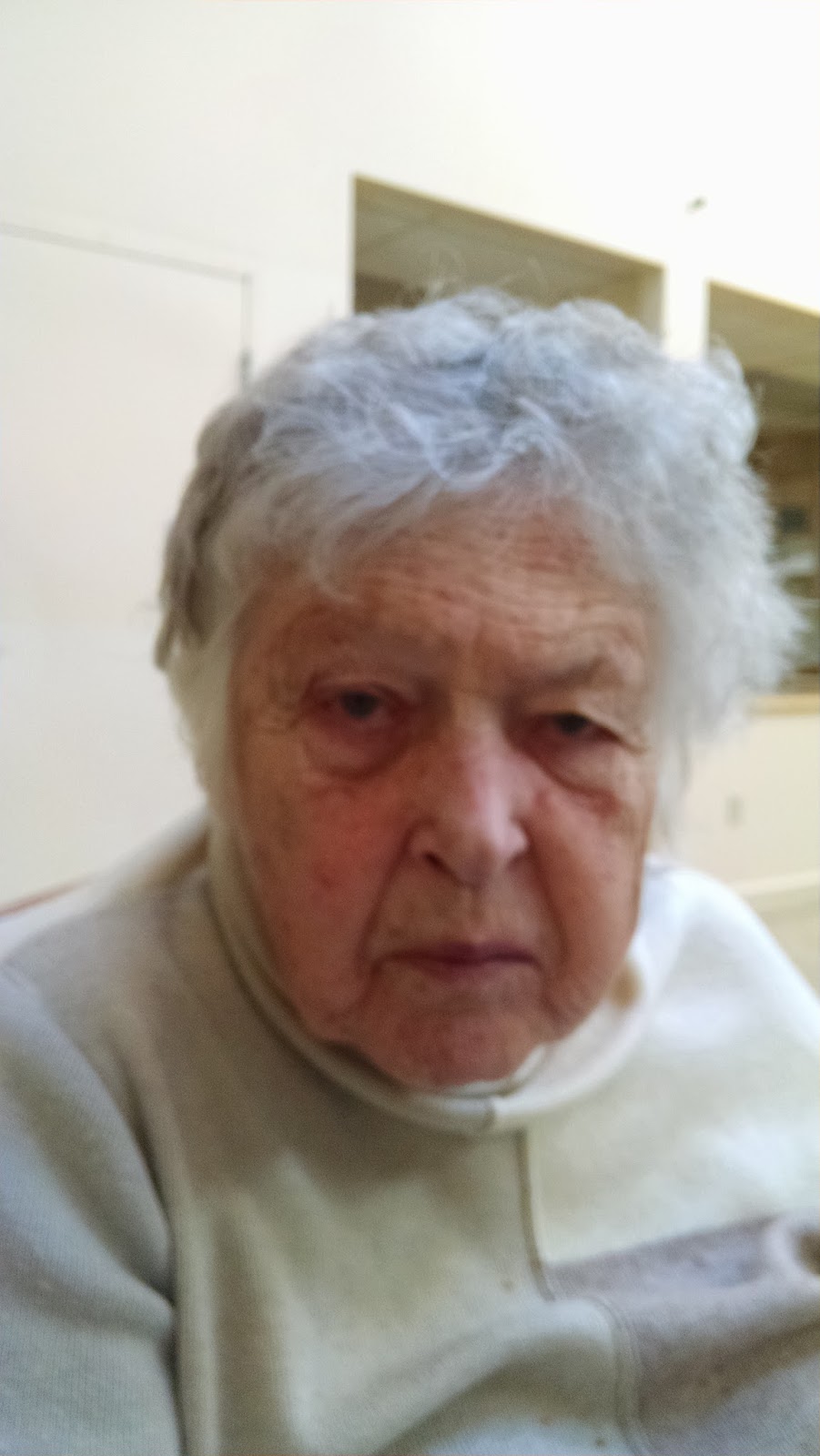
During this time, I took her photo.  I showed it to her and asked her who it could be.  She thought it was her mother.  I explained it was she, my dear mother, who was in the picture.  She looked at me as though I had tried to fool her.  Oh well.
IMG_20160110_112540805.jpg
Through our conversation she kept dropping off to sleep, lifting her head, once in awhile to listen to the table of ladies next to her chatting about nothing (really, it was nothing - everything they stated was random - it was quite a mental exercise to keep up).    

She finally started in on her eggs, with her fingers, picking out the vegetables and cheese from the omelet, and then reached for the paper.  As I left, she was involved in the pictures and nodding off, picking up a little egg here and there, some not making it to her mouth before she nodded off.

Within the week she should be adapted to the medication and, hopefully, will be a tad more alert during our visits.  While her voice has become very weak, and her mumbling more the norm, she does try to make sense, in her mind.  

She has developed a wee cough which they are monitoring and looking at to ensure she doesn’t become sick.  

But that’s all folks, for this week!  Tune in next time!

Thursday, January 7, 2016

The Family Costs of Dementia - Part Two

In The Family Costs of Dementia Part One, I went through the national average costs of care for the patient with dementia.  In this post, I would like to talk about Insurance, Plans, and Medical Costs for the patient, which will be added to those other care costs mentioned in Part One.  


According to the National Institutes of Health (Health care costs for dementia found greater than for any …), the average cost for a patient with dementia was approximately $257,000 compared to those without dementia ($183,000) who incurred costs due to illness or necessity of treatment. Per year, Medicare pays approximately $2,700 to help cover personal medical costs (The Financial Cost of Dementia) on top of any other insurance or residential, in-home or other care that the patient is receiving.  It must be noted, as well, that this does not include the out-of-pocket expenses that are incurred by the patient or the families (many of whom find themselves requiring some form of medical treatment due to the stress and impact of the other family member’s diagnosis - High Costs of Long-Term Caring for Alzheimer's Patients ...).


Fortunately, many of these costs can be used as tax deductions, so long as they equal more than 10% of the gross adjusted income for the filer.  This includes the care  (Tax Deductions & Credits | Caregiver Center).  For example, our mother’s nursing care expense, per month, is approximately $3,000.  This would equal about $36,000 that can be deducted from her taxes, along with her prescriptions, medical expenses, etc., which helps soften the blow of the costs involved.  Luckily, her monthly prescription bill (with Medicare PlanB) comes to approximately $85 per month (or roughly $1,050 per year).  Add that to the dental costs (she doesn’t have dental insurance), and this helps greatly with her finances.  


Now, there are some insurance companies that have coverage for memory/nursing care, as well, which would help with the financial aspects of care for the patient; however, most people afflicted hadn’t the foresight to buy such insurance.  


The Alzheimer’s Organization (Alz.org) has a very good planning page for those who might be facing upcoming expenses or those who are lost with the myriad of expenses they hadn’t considered (Planning for Care Costs | Caregiver Center).  This is invaluable information to consider.  I do know some people who are beginning to plan and take some matters in hand to ensure they haven’t the morass of red tape and paperwork that comes with a family member being diagnosed and no planning has occurred before.  


So, in planning, know what your assets are.  Know what your family member’s insurance covers and what insurance they have (believe me, trying to go through papers and figuring out what may be what is utterly exhausting and confusing), then begin the process of using your power-of-attorney to allow you to take proper actions for the welfare and benefit of the patient.  The paperwork can pile up very quickly as you being paying the bills that were neglected, ensuring premiums and medical plans are kept up-to-date, and you can keep supplying the patient with regular supplies of necessities and prescriptions while ensuring their care is going well.  


Remember, being the primary person for someone with dementia (regardless of where they live) is a full-time job for which there may be little or no compensation.  This is another unstated cost.  


While it was quite difficult to find information on the per-person expenses, I believe I’ve given a decent indication of what to prepare for.  


As I sign off on this post, I will leave you with a story from last July 2015, which gives an indication of what lack of preparation and understanding could create.  Just be sure to do your homework and prepare yourself and your loved ones.  


Tuesday, January 5, 2016

Article Share: Why We Missed the Signs of My Mom's Lewy Body Dementia by Candy Schulman

The following is a share of an article that appeared yesterday morning on the Lewy Body Dementia Association’s Facebook page.  There are many similarities in this story to mine own, and differences, as well.  This poignant story helps illuminate some of the struggles families encounter when their loved one begins to decline and no one can give any answers.   You can read the article at Next Avenue.com.


Why We Missed the Signs of My Mom’s Lewy Body Dementia

Robin Williams also suffered from the disease, often misdiagnosed as Alzheimer's


January 4, 2016
Older woman
Credit: Thinkstock

I never imagined my mother would have anything in common with actor and comedian Robin Williams. But when his widow revealed that he suffered from Lewy body dementia, she said, “Lewy body dementia killed Robin. It took his life.”
She linked this often-misdiagnosed and incurable form of dementia to his suicide, saying that he had been expected to live only three more years.
No one can truly predict anyone’s life expectancy. I believe my mother suffered from the same debilitating illness for at least 10 years.

A Misunderstood Disease

Lewy body dementia (LBD) affects 1.4 million people in the United States, according to the Lewy Body Dementia Association. Often misdiagnosed as Alzheimer’s or Parkinson’s, Lewy body dementia is caused by abnormal protein particles that accumulate in the brain, disrupting normal brain functioning. Diagnosis of the illness, which makes up 20 percent of all dementia cases, can be confirmed only upon autopsy.
I missed my 85-year-old mother’s earliest signs — and so did her doctors.
Diagnosis of the illness, which makes up 20 percent of all dementia cases, can be confirmed only upon autopsy.
I was helping her plan her annual Chanukah celebration, which included eight grandchildren and nine great grandchildren, and she kept struggling with the guest list. My mother was determined to write down everyone’s name on a pad, calculating how much food to cook and order. She became increasingly frustrated, ripping up the paper and starting again, until she was in tears.
Sitting next to my mom, I tried to guide her through a relatively simple process. At the time, I attributed her difficulty to ordinary memory problems experienced by any octogenarian — even one as robust and active as my mother. She still drove, played golf several times a week and carved sculptures in art classes.

Scary New Symptom

I didn’t realize she was hallucinating until she tried to convince me that one of her sculptures was having sex. “Come here and watch closely,” Mom insisted, leading me over to an abstract gray alabaster. It looked like two genetically-challenged fish, overlapping and, I supposed, intertwined against each other.
“You think I’m crazy, don’t you?” she asked.
“Of course not,” I said, unsure.
Visual hallucinations are more common and frequent in LBD than in Alzheimer’s. Symptoms also include mood swings and balance problems, according to the National Institute of Neurological Disorders and Stroke. This is why LBD is often misdiagnosed as Parkinson’s or Alzheimer’s.
“Alzheimer’s and LBD are both common forms of dementia resulting in worsening cognitive skills,” said Dr. Sonja W. Scholz, assistant clinical investigator at the National Institutes of Health in Bethesda, Md. “Lewy body dementia is characterized by a mixture of symptoms including cognitive decline, visual hallucinations, fluctuating mental status and Parkinson’s disease-like symptoms including slowness of movements, tremor, rigid muscles and balance problems.”

Paranoia and Agitation

For years, I didn’t know why my mother had such agitation that caused her to roam and obsessively rearrange closets. She would call 911, claiming people were trying to kill her. Her doctors put her on anti-psychotic medication, believing this was the correct treatment, but these medications are not useful for LBD patients — and can even be life-threatening.
Her involuntary, jerky body movements were difficult to watch and impossible to stop. I covered her hands with mittens so she wouldn’t scratch herself. Often, I felt as helpless as I imagined she did, wishing I knew how to alleviate her discomfort.
Ten years after her first symptoms appeared, my mother died, bedridden and not recognizing anyone in the family. Her greatest fear was getting Alzheimer’s; little did she — or her family — know she had LBD. She was never accurately diagnosed. Although one neurologist suspected my mother might have LBD, mom was treated as a patient with generic age-related dementia. Only in retrospect did I come to realize the true nature of her devastating illness.

More Awareness Needed

Public awareness is the first step in helping others navigate Lewy body dementia. Genetic research is ongoing in the effort to develop disease-modifying therapies, although more funding is needed. There are breakthroughs in diagnosis, such as a three-minute test called the Lewy Body Composite Risk Score (LBCRS), still in its early stages and not yet widely used; it was developed by Dr. James E. Galvin, a leading neuroscientist at Florida Atlantic University.
Unfortunately, I wasn’t able to get my mother the help she needed. But families can be more hopeful the more we learn to recognize LBD symptoms.

Sunday, January 3, 2016

A Gift of the Season - OR The Week Ending 01/03/2015

When people enter hospice they typically begin a general decline.  However, with Lewy Body Dementia this isn’t always the case as we have seen with the Mater Majestica.


The odd miracle is that this week she seems to have come back around - for the most part!  She is engaged in reading her paper, can recognize people in their photographs, is participating in activities - not necessarily physical - and conversing up a storm (not necessarily tracking on a regular track but being quite random in her thoughts and thinking).  


Monday and Tuesday she arose for breakfast a bit later and then quickly began to slip into a doze from the methadone.  Soon after, though, she awoke and became rather bright.  Both days she decided she didn’t want to just sit about and she was panging for some activity; so, she grabbed her walker and began charging through the cottage walking the oval as though she were taking laps.  How different this is from what we’ve seen in the recent past!   


She did, though, decide to sleep through the gardening class that was being held in the great room; she opted for sleep, instead, despite Mornina’s and my encouragement.  She just sat in her grandmother’s rocker and slept until lunch time.
IMG_20151229_110122343.jpg
This was the best pose Mom could muster - but it shows how she is right after her medication dosage in the morning.
On Wednesday and Thursday she participated in regular activities, but nothing that required anything much more than sitting and watching.    


Friday, she arose feeling somewhat peppy (did I mention her attitude of late has been quite positive?).  Of course, she appeared for breakfast rather late.  By this time, Jean had phoned to let them know she would be on her way.  The staff came out and let Mom know her buddy was going to be coming for a visit.  UP went Mom to her room to freshen up.  She splashed water on her face and looked at a change of clothes.    


Earlier, one of the staff had asked her about the photos on her wall (as an indicator of where she was with her mental abilities).  Mom spoke of all of them, telling a story or two about each.  Then, surprisingly, Mom spoke of the photos of her “three amazing sons” of “whom I am quite proud!”  Now, this was a report, and I’m not sure how accurate it was, but it felt good that she was in such a good state (there are four of us, but there is one photo taken before my birth and this is the one, I believe, to which she referred; and, no, I haven’t any issues with this.  I’m gladdened by her positive remarks).  


When Mom reappeared, she asked where Jean was.  The response was that she would be coming soon.  “You lied to me!” exclaimed Mama.  “You told me she was here!”  Well, Jean did finally appear and Mother was ecstatic.  


Soon, I would appear to see them both.  Mom was bright and cheery and seemed to tolerate my presence - especially after I brought out the cookies from her room I had brought her the previous week.  She shared these with Jean and then dismissed me.  I left after checking on her needs, so she and Jean could have their “girl time”.  
IMG_20160101_133014109_HDR.jpg
The girls enjoying their time together 
The rest of the week remained much the same.   


Sunday, Mom ate around 930 am, and then read the paper.  Due to the weather, I was unable to make it to her, but I received regular reports that she was enjoying the snowfall and the peaceful nature of the residence.  

Now, we know this level of abilities cannot last, but since this is the magical season of Christmas I welcome the gift, no matter how short or long it lasts.  So, this was a very good week.

Thursday, December 31, 2015

The Family Costs of Dementia - Part One

Putting someone into a nursing facility has its own issues - emotional and psychological.  These will be explored in Part Two.  


For the purposes of this post, I will be exploring the financial costs of care for the patient suffering from dementia.
In 2013, A RAND (Research And Development) Corporation study estimated the national costs of dementia to between $159 - 215 Billion (The High Cost of Dementia).  Some of that is absorbed in the MediCare system, but for many, the costs come from the pockets of either the afflicted or their immediate families.  
money1.jpg
So, what are the costs?  
homecare1.jpg
Let’s say you’re caring for your parent and you know you need assistance, because they can’t possibly be left alone.  So, what are your options?  Daycare and/or In home services.  Services are out there which can provide some respite - for instance, doing light housework, companionship, and other assorted chores (for which you may be too exhausted to tend to yourself).  On average, this will cost approximately $21 an hour (2012 figures) for home care workers, and just slightly less for a homemaker to come in ($20)  (MetLife 2012 Home Care Costs Table).  So, in your budget you might have them come three times a week for 3 hours a time.  That adds up to approximately $360 a month for help.  Of course, there are those who hire these people to come in and work for them while they go to work, and this could be 10 hours a day 5 days a week.  So, that would add up to approximately $4,515 a month (or approximately $54,180 per year) - pretty incredible, right?!  Do the math.  It’s expensive to care for someone and work, as well.  

adultdaycare1.jpg
So, you might opt for Adult Day Care.  The national average for this is approximately $70 per day  (MetLife 2012 Adult Day Care Costs).  “Aha!” you say.  This would be much cheaper than in home care.  Per month, this would cost about $1,540 (or approximately $18,480 per annum) which is much much more affordable.  But the other factors to consider are whether or not your parent can adapt to the locale, if you’re able to come on a moment’s notice in case something happens, and how good the care is at the particular facility (as it must be considered as well as workers, or any other type of placement for your loved one).  
adultdaycare2.png


Next, you might have considered Assisted Living.  Many find this a necessary option as they may have to wait for an opening in a particular Memory/Nursing Care facility.  People in Assisted Living can no longer tend to their own needs, and need the extra supervision and help to perform their daily living tasks.   While more expensive than Adult Day Care, it allows for the patient to have their own space while feeling more independent and allows for the family caregiver to breathe a bit more easily.  The cost?  Well, according to the same Metlife survey the cost on a national average is $3,550 per month or approximately $42,600 per year  (MetLife Assisted Living Costs 2012).
assistedliving1.jpg


Before I turn to Nursing/Memory Care, I would like to also remind the reader that we haven’t yet discussed insurance premiums, MediCare costs, Plan B or any other supplemental plan(s), Doctors, Dentists, or any Pharmacy Costs, which will also need to be added to the costs.  


So, now we need to take a look at Nursing/Memory Care for our parent.  Many facilities have different rules attached to their populations; believe me, there are some who will tell you to find a different placement for your loved one once they reach a certain stage, which will only serve to create more issues for the patient and the family.  However, this is something that needs to be considered when considering a viable placement for your family member.   
nursing care.jpg
I’m not going to be going into different aspects of care, as this post is to outline the costs, on a national average, so you can be aware of what you may be facing.  Are you ready?  Okay.  The national average for nursing care in the United States is $222 per day for a semi-private room (or approximately $81,030 per year), or $248 per day for a private room or approximately $93,184 per year (MetLife 2012 Nursing Home Costs Table). Wow!  .
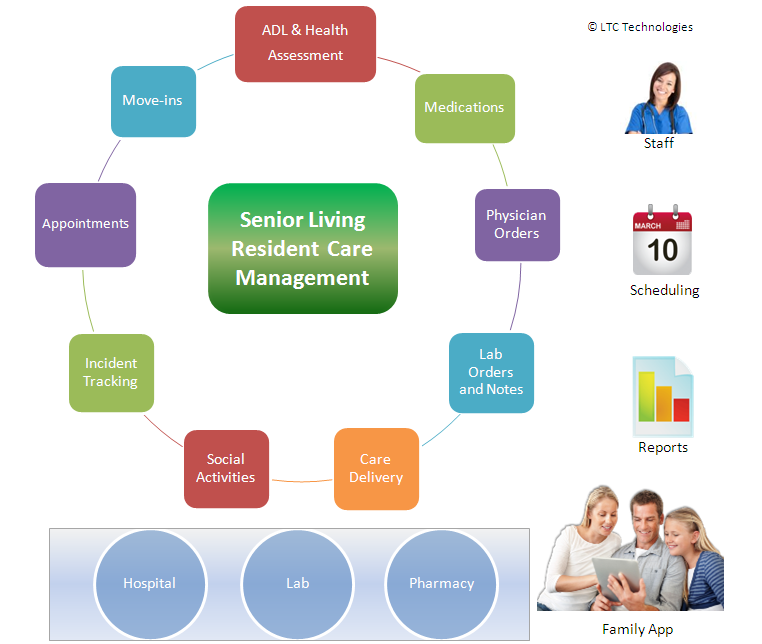
SeniorLivingSoftware-Overview.png
Keep one thing in mind, though, by hiring an Elder Law Attorney, and having all your papers in order, you might be able to work through the mire and mess of the financial sting to the benefit of the patient.  There are programs which allow patients on MediCare to live in facilities you might assume are beyond yours and your family’s abilities.  


We’ll explore more about these in the near future posts.  
Until then, Happy New Year!.    

Tuesday, December 29, 2015

The Financial Costs of Dementia

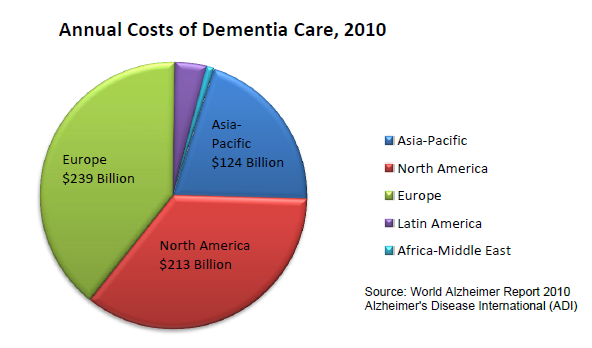
dementia-care-annual-cost-2010.png

No one really considers the financial burden of dementia on the populace, as a whole.  We are more prone to accept fundraising for cancer, heart disease, birth defects, and other foundations while pushing the plight of the elderly to the side, for the most part.   However, it has become increasingly clear that dementia costs are dramatically higher than for those others, and those costs are about to grow exponentially.

There is an article in the New York Times, as well, which exemplifies the costs of dementia are growing quickly, as well! (Costs for Dementia Care Far Exceeding Other Diseases …)
To put things into perspective, insofar as the costs, let’s look at the chart below, which demonstrates the costs of dementia compared to the revenue of two major corporations:
chart-dementia-costs.png
If Dementia were its own country, it would be the 18th largest economy in the world.  The costs are nearly double the revenue of Exxon Mobil!  And these are the figures from 5 years ago!  Since then, the numbers have only grown.  

According to the Lewy Body Dementia Association:

The total economic cost of dementia in 2010 was estimated to be $109 billion for care purchased, and $159 billion to $215 billion when the monetary value of informal care is included. The range of estimates reflects two different methods researchers used to place a value on unpaid care. The per-person cost of dementia was $56,290 or $41,689. Medicare paid about $11 billion of dementia-related costs.
Researchers say the main component of the dementia costs is for institutional and home-based long-term care rather than medical services. The cost of nursing home care and formal and informal home care comprise 75 percent to 84 percent of dementia costs.(Cost of Dementia Tops $157 Billion Annually in the United …)
So, what does that mean for you and me?  It means that paying attention to your family members and being willing to understand that this syndrome (yes, the medical community is moving toward having dementia made a syndrome, as it  has so many more components than originally understood) will affect more people around you than was understood in the past.  
President Obama, in 2011, signed the National Alzheimer’s Project Act, which tracks the costs of dementia, and ensures good care is provided while also seeking more treatments and research to help with the problem of rising costs and rising patient numbers.  
According to the New England Journal of Medicine:
The estimated prevalence of dementia among persons older than 70 years of age in the United States in 2010 was 14.7%. The yearly monetary cost per person that was attributable to dementia was either $56,290 (95% confidence interval [CI], $42,746 to $69,834) or $41,689 (95% CI, $31,017 to $52,362), depending on the method used to value informal care. These individual costs suggest that the total monetary cost of dementia in 2010 was between $157 billion and $215 billion. Medicare paid approximately $11 billion of this cost.(Monetary Costs of Dementia in the United States)
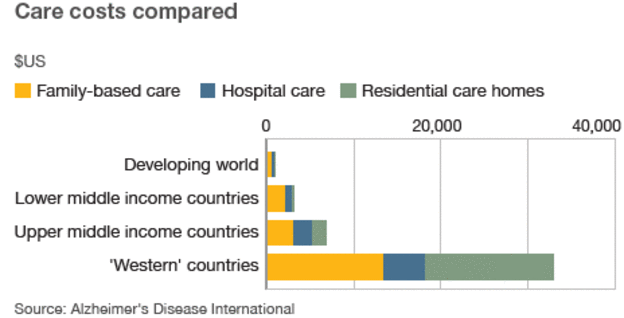
To be honest, it is quite difficult to find any care center that will charge much less than $5,000 per month; we were fortunate to find such a place.  I hear stories of people who are paying between $6-10,000 per month- and that doesn’t necessarily cover the medical bills (doctor, neurologist, medications, etc).  Some of these placements, too, will care for the patients until they are unable to be mobile, and at that time need to find another placement (I find this absolutely cruel, as the change of placement and the confusion that surrounds it could compound issues for the patient, leading to a faster demise).  
In home care, too, can be quite costly, unless you have a compliant patient ( the opposite of Mom), and a solid network of resources for respite.  There are adult daycares in most areas which will help with mildly demented patients, but after a time these will not be a viable option, either.  Visiting Angels is a great resource I’ve known people to use (for cancer patients, dementia, and other illnesses), and they charge about $20.00 per hour, which for some might be steep on a limited income, and they are not replacements for nursing care.  
According to the Alzheimer’s Association when planning financially for dementia, the list is as follows:
Common care costs include:
  • Ongoing medical treatment for Alzheimer's-related symptoms, diagnosis and follow-up visits
  • Treatment or medical equipment for other medical conditions
  • Safety-related expenses, such as home safety modifications or safety services for a person who wanders
  • Prescription drugs
  • Personal care supplies
  • Adult day care services
  • In-home care services
  • Full-time residential care services
Are you prepared?  Luckily, Mom was a saver, and what she had combined with her SSI and pensions helps pay the costs of her care, as well as the sale of her home (which was invested).  So, we are fortunate with that aspect.  But, have you and your family considered a plan, just in case?  It might be wise to avoid being a statistic.
_49187586_alz_care_costs_464.gif
One of the greatest gifts I received this year for Christmas was a donation made in Mom’s name to the Lewy Body Dementia Association.  Words cannot convey the depth of feeling this parlayed, as it came from such an unlikely source, as was so very generous in spirit and amount.  
If you believe you have the capacity to donate to either the Alzheimer’s Association, or the Lewy Body Dementia Association at some time in the future, please do.  Every bit helps, and the sooner we can begin to understand the facets of the syndromes, the sooner we may be able to allay the unforeseen costs.